ABC-Development Strengthens Community Capacity on Scorecards, Data Collection and Social Accountability

Updated: Aug 25

Venue: Community Level, Madina Town, Tonko-Limba Chiefdom, Kambia DistrictProject: Supporting Gender Equality and Social Accountability through a Strengthened Civil Society in Kambia District
ABC-Development conducted a community-level engagement focused on the production and use of quarterly community scorecards, bringing together community stakeholders, councillors, young women in governance networks and youth leaders.
The activity was implemented under the project “Supporting Gender Equality and Social Accountability through a Strengthened Civil Society in Kambia District,” funded by the European Union through Trocaire, the lead partner for the consortium.
A total of 35 participants participated in the engagement, comprising 21 women and 14 men.
The engagement sought to strengthen the capacity of community actors to collect, understand and use reliable data as evidence for advocacy, community monitoring and social accountability.
The engagement was designed to improve participants’ knowledge of quarterly scorecard production, community scorecards and other social accountability tools.
The activity also aimed to strengthen the capacity of women’s networks, youth leaders, councillors and community stakeholders to generate evidence on issues affecting their communities and use that evidence to engage duty bearers and advocate for improved service delivery.
This work contributes to the project objective of strengthening civil society to support women’s empowerment and women’s active participation as actors in democratic governance and development in Sierra Leone.
Participants received practical presentations and engaged in discussions covering:
An overview of the project and its objectives;
Understanding data and data collection;
Types and methods of data collection;
The importance of accurate and reliable data;
The effects and challenges associated with inaccurate data;
Key steps in the data collection process;
Introduction to community scorecards;
Administration and application of community scorecards;
Advantages of community scorecard tools;
Social accountability tools;
Practical examples and samples of community scorecards; and
Group exercises and presentations on community scorecards.
The practical approach enabled participants to connect the concepts discussed with real community situations.
A key focus of the engagement was strengthening the capacity of young women in governance networks to participate more effectively in evidence-based advocacy and accountability processes.
By equipping women and community stakeholders with practical tools for collecting and using data, the project seeks to create stronger opportunities for women to raise issues affecting their communities and engage decision-makers with credible evidence.
This approach supports broader efforts to increase women’s voice, influence and participation in democratic governance and community development.
The engagement achieved several important outcomes:
Women representatives and other targeted community stakeholders actively participated in the engagement.
Participants demonstrated improved understanding of data collection and the importance of accurate data.
Participants gained knowledge on the production and use of quarterly and community scorecards.
Participants improved their understanding of social accountability tools.
Group exercises provided an opportunity for participants to apply the concepts discussed.
Participants gained practical knowledge that can support evidence-based advocacy and community monitoring.
The engagement therefore provided an important foundation for communities to move from simply identifying challenges to collecting evidence, documenting concerns and advocating for solutions.
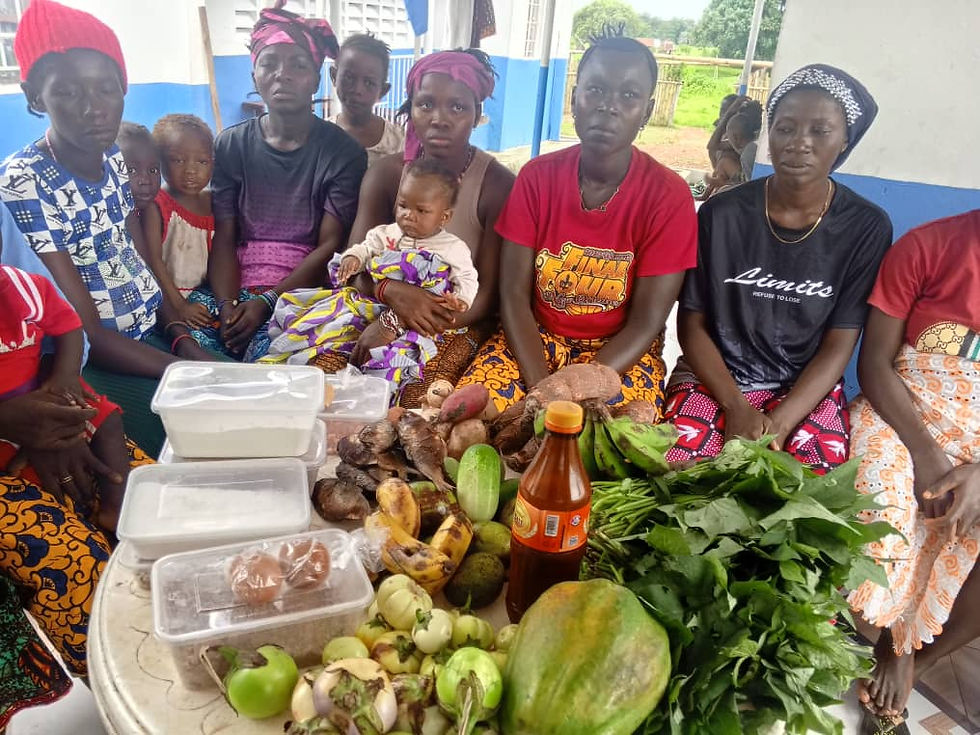
One of the challenges encountered was that some participants had divided attention because of competing livelihood activities, particularly the local market activities.
Despite this challenge, the engagement was successfully conducted, with participants contributing to discussions and practical group exercises.
Future engagements can continue to take participants’ livelihood schedules into consideration when planning community-level activities to maximise attendance and participation.
The engagement will be followed by a number of activities aimed at translating the knowledge gained into community action.
These include:
Supporting the development of evidence-based position papers and advocacy campaigns.
Supporting women’s networks to conduct data collection and people-to-people awareness raising.
Supporting women’s networks and community stakeholders to use community scorecards and other social accountability tools.
Hosting radio discussions and airing awareness jingles to increase public understanding of accountability and community participation.
Conducting regular follow-up monitoring of project activities and progress.
The community scorecard engagement represents an important step towards strengthening community-led accountability and evidence-based advocacy in Kambia District.
When communities are equipped with the knowledge and tools to collect and use reliable information, they are better positioned to identify service delivery gaps, engage duty bearers and advocate for meaningful improvements.
ABC-Development remains committed to strengthening civil society, promoting gender equality, amplifying women’s voices and supporting inclusive participation in governance and development.
Project: Supporting Gender Equality and Social Accountability through a Strengthened Civil Society in Kambia District Funding: European Union, through Trocaire Implemented by: ABC-Development


Comments